
Floyd County Busted Mugshots Explained
A Floyd County mugshot starts with an arrest. Rome Police, a county law-enforcement unit, the sheriff, Georgia State Patrol, or another agency with lawful authority brings someone to the Floyd County Jail, and the jail creates or receives the custody entry. The photo comes from that booking. What the public roster shows is a narrower slice of the file, which matters when a name appears under a hold, boarder, transfer, or warrant label instead of a fresh Floyd County charge.
Records change hands as a case moves along. The arresting agency keeps the arrest report. The jail keeps intake and custody details. Courts hold the docket and final outcome. A practical flow runs from arrest to booking and photograph, onto the current-custody roster, then release or transfer, and finally the court result. An entry marked pretrial simply describes custody before the case ends, and a bond amount is a procedural field that can shift. The jail serves Floyd County, Rome, and Cave Spring, and it also holds county-sentenced people, state-sentenced people in certain arrangements, boarders, and holds. The Floyd County Corrections Center on Blacks Bluff Road is a separate state-sentenced system, so anyone serving a Georgia sentence belongs in a Georgia Department of Corrections lookup, not a county booking count.
For any search, write down the arrest date, agency, age or date of birth when lawfully known, and case number if available. A neutral view of the county's official custody search appears on the Floyd County Sheriff's Office current-inmate page. The screenshot there shows the last-name search and public roster fields rather than a gallery of booking photographs.
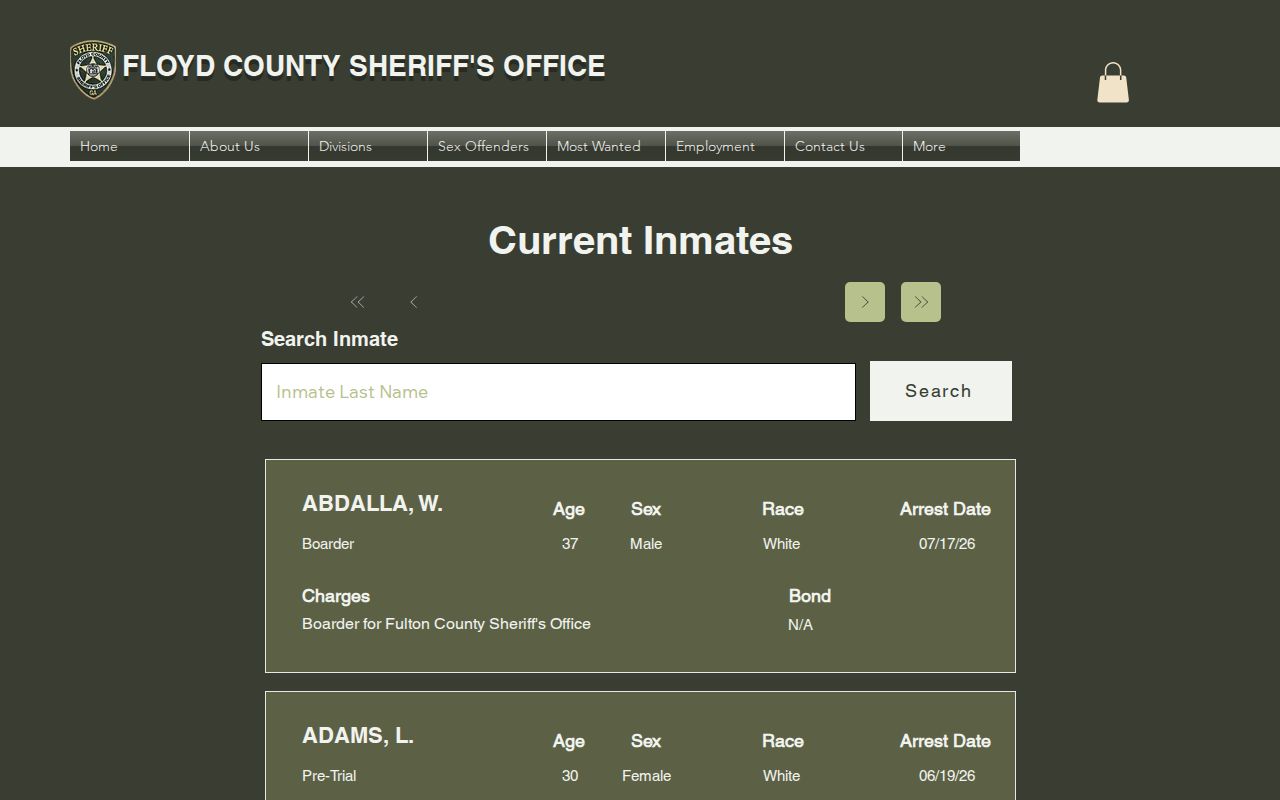
That roster works well for current custody. Once a person is released, their booking record may move to a county records channel. That path is described below. The image is an interface reference only. It is not an on-site mugshot gallery.
Fields in a Floyd County Booking Record
The public current-inmate view shows less than a full jail file. Expect an abbreviated name, age, sex, and race. The entry may also list an arrest date, a custody or category label, and charge or warrant wording. Many entries include a statutory code. Some show the originating jurisdiction, and many show a bond type or amount. A booking number was not visible there. Nor were a court date, cell location, release date, or confirmed photo field in the accessible rendering. Treat that absence carefully. It marks an unconfirmed public field, not proof the jail system never stores it.
| Field | What the record can show |
|---|---|
| Name and identifiers | An abbreviated public name, with an age or other identifier used to separate similar names. |
| Arrest date | The date entered by the roster. It may differ from the report print date or the booking time. |
| Custody category | Labels such as pretrial, boarder, hold, transfer, re-book, or county-sentenced status. |
| Charges or warrant text | The charge or warrant language entered for jail operations, sometimes with a statutory citation. |
| Originating agency | The agency or jurisdiction shown when the public entry provides it. |
| Bond | The displayed bond type and amount, which can change and does not predict release time. |
| Booking number, court date, photo | Not confirmed in the accessible roster view. Ask for existing fields in a focused records request. |
| Legacy media-report fields | Older sheriff-formatted daily reports can add arrest time and place, officer and agency, release or bond information, booked charges, and a photo. |
An older format offers more detail. It is called the "Media Report 3 w photo (Recurring)," and it goes beyond the live roster. Its operational wording is just that. Labels like "cleared by arrest," "released," or a warrant tag carry no judicial weight here. Addresses printed in older reports are sensitive. They play no part in identifying the public source.
A named request needs specifics. Give the custodian the full name and any useful alias. Add the approximate arrest or booking date and the arresting agency. List the records you want precisely. A known booking number helps, and so does a date of birth. Either one can prevent common-name mix-ups. The goal is to locate existing records, not to ask the agency to write a new narrative.
Who Got Busted in Floyd County?
"Busted in Floyd County" is a search phrase, not a custody category. Someone arrested by Rome Police can be booked at the county jail. A different entry tells a different story. It might be a boarder from Fulton County, a transfer, or a probation matter. It could even stem from a warrant in another jurisdiction. The roster's category and charge text hint at why a name appears. But the arresting agency and court file hold the fuller context.
The sheriff calls the Floyd County Jail a regional custody point. Its population is mixed. Pretrial detainees sit alongside county-sentenced and state-sentenced people, boarders, and holds. The separate Floyd County Corrections Center, or prison, is different. It houses people convicted and sentenced to state custody. Keep it out of any count of recent arrests.
Bond adds its own layer. The sheriff's bonding lobby runs around the clock. The only closure is daily from noon to 1 p.m. An exact cash or money-order bond carries a $20 service charge. That is a bonding fee, not a public-records cost. Processing, court orders, probation paperwork, and other checks can all delay release. So a posted bond is not an exact roster-removal clock.
Note: A current roster can show an old arrest date because custody simply continued, so "current" describes custody, not the arrest date.
Request Floyd County Busted Records or Photos
For a released booking, there is a documented fallback. The same applies if the roster never exposes a photograph. That fallback is the Floyd County NextRequest portal. The sheriff routes its records work through that county request system. Ask for the existing booking sheet and the existing booking photograph as separate items. Add a date and details that distinguish the person. Request electronic delivery, and ask for an estimate before any chargeable work starts.
Floyd County Sheriff's Office
2526 New Calhoun Highway NE
Rome, GA 30161
706-291-4111
Booking extension 8834
County records custodian
Lauren Chumbler
12 East 4th Avenue, Suite 209
Rome, GA 30161
706-291-5110
The portal is the trackable starting point for jail records.
Use this order when the goal is a specific booking:
- Identify the person and approximate date, then name the sheriff or jail as the department.
- Request the booking sheet, booking photograph, and release or transfer entry separately if each is maintained.
- Ask for electronic copies and an itemized estimate before fees are incurred.
- Allow the agency to redact exempt material and identify the exemption instead of asking for a new report.
- Match the returned intake record to the court docket before describing the case outcome.
Georgia lets anyone ask for government files under the Open Records Act, O.C.G.A. §§ 50-18-70 et seq. The Georgia Attorney General's Open Government FAQ walks through the basics. Agencies usually answer within three business days. When they cannot produce a record that fast, they should tell you when to expect it, roughly what it will cost, and whether any exemption applies. Staff time for the first fifteen minutes is generally free. Paper copies usually run $0.25 per page unless a different law sets the price. No Floyd-specific booking-photo fee turned up anywhere.
How long a record survives matters too. A 2026 county retention schedule keeps jail booking records for ten years after release and jail registers for ten years after the final entry. There is no separate confirmed ten-year rule for photographs. Ask the custodian which record series governs an image. Keep in mind that retention and online visibility are separate things. A roster entry can drop off the web the day someone is released, while the underlying file sits in storage for years.
The county's public request portal has a neutral landing page. It shows the records-custodian notice and the request controls.
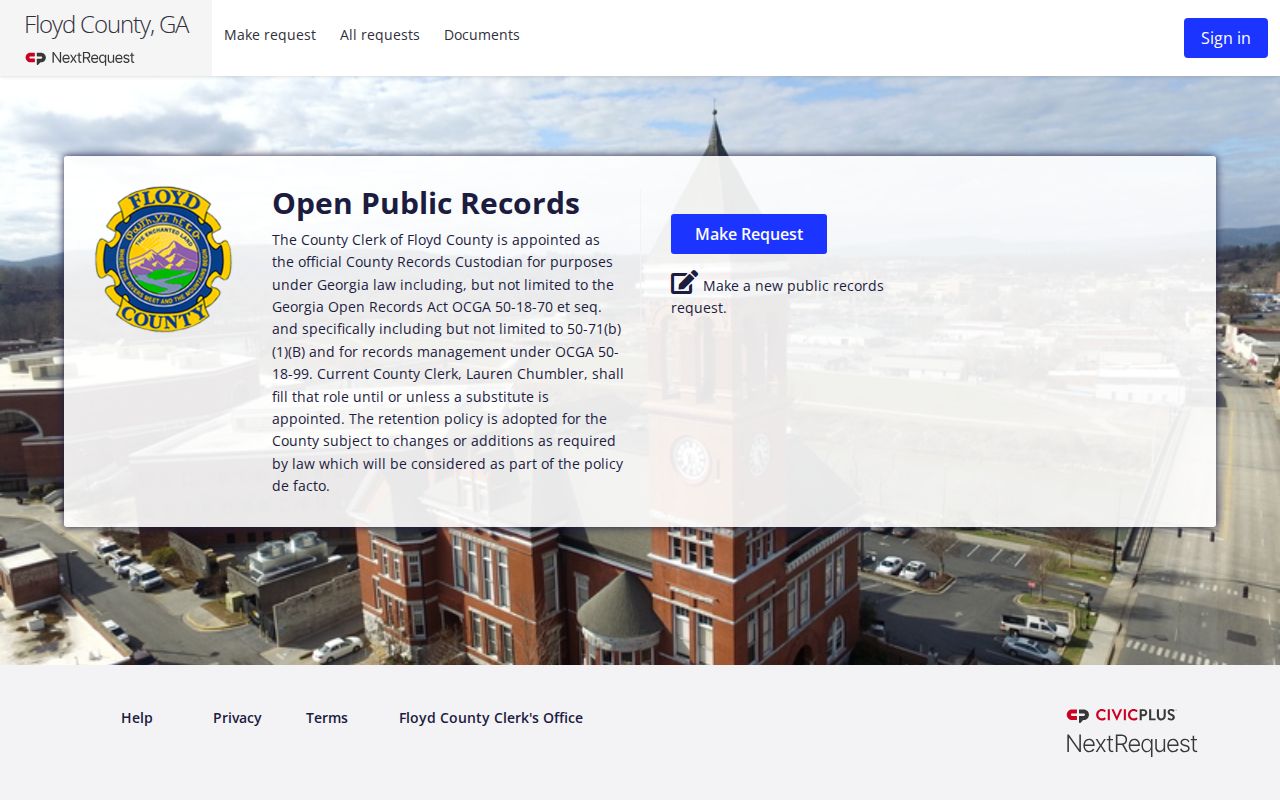
Ask for a file that exists. Do not ask for a custom arrest history. That wording gets better results. If the answer says no separate photo is kept, or an exemption gets cited, save the response exactly as written.
Georgia Law on Floyd County Busted Mugshots
Getting a record and seeing it online are two different things in Georgia. The Open Records Act opens the door to existing government files. But exemptions can force redaction or withholding. Medical details are protected. So are juvenile material, victim information, active-investigation content, security-sensitive fields, sealed records, and anything else the law carves out. One more limit is simple: the sheriff cannot be forced to build a record that was never created in the first place.
A Floyd County booking entry documents one intake event at the jail. So does the photograph that goes with it. They are a snapshot. Nothing more. For what happened later, check the court disposition.
Georgia has a commercial mugshot statute, O.C.G.A. § 10-1-393.5. It sets up a no-charge removal process when certain outcomes apply to covered arrest-photo publishers. The Georgia Consumer Protection Division's mugshot guidance lays out what counts: record restriction, closure without referral, an expired charging period, dismissal before charging, certain grand-jury no bills, dismissal or nolle prosequi of all charges, a qualifying drug disposition, or acquittal on all charges. The exact legal category matters.
A proper request names the person, date of birth, arrest date, and arresting agency. Georgia's guidance calls for certified mail with return receipt or statutory overnight delivery to the right recipient at the publisher. Once a compliant request lands, the publisher has thirty days to take the photo down at no cost. Newspapers, periodicals, broadcast outlets, and qualifying news or commentary material are exempt. So the statute does not guarantee every copy vanishes.
Juvenile files and sealed or restricted records deserve extra care. GBI explains the Georgia record-restriction process under O.C.G.A. § 35-3-37. Juvenile confidentiality falls under O.C.G.A. § 15-11-700 et seq. Restriction changes what moves through Georgia criminal-history systems, yet it will not scrub every sheriff, publisher, or search-engine copy on its own. Keep a corrected court disposition with any removal request.
Note: The official consumer guidance page describes the state's no-fee route without any paid intermediary.
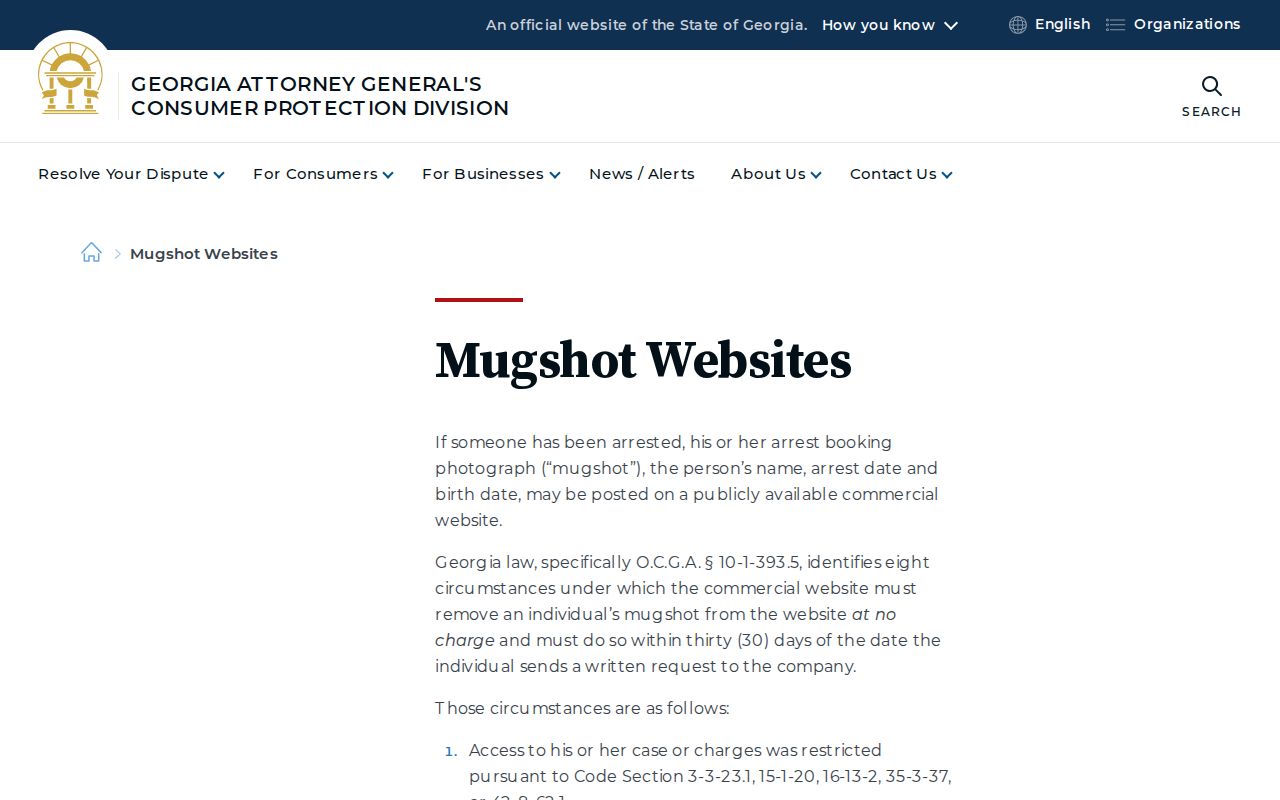
The statute also reinforces a basic record rule: source correction, legal restriction, publisher removal, and search-cache refresh are separate actions.
Stale Floyd County Busted Copies
Start at the source. If a roster or court entry is wrong, ask the responsible office to correct it. When a qualifying disposition supports Georgia's free commercial-publisher process, send the required identifying details and proof by the method § 10-1-393.5 describes. And do not mistake a current roster dropping someone after release for legal removal. The first is just a custody change. The second takes an action by a record office, a court, or a publisher.
Third-party sites each play by their own rules. RecentlyBooked's Floyd page is an unofficial rolling archive whose removal policy allows free requests on listed grounds such as dismissal, restriction, a wrong person, a duplicate, or an inaccurate or outdated entry. Mugshots.com also keeps an unofficial, deep Floyd archive rather than a live jail roster, and its maintenance policy talks about documentation for qualifying sealed, expunged, destroyed, or identity-theft records. Georgia Gazette's Floyd section has its own request process plus a statutory explanation. None of these outranks the sheriff or the courts.
No verified Floyd-local Busted Newspaper or Mugshots.zone section exists. A guessed URL is not a resource. When a third-party copy has no clear policy, rely on the official Georgia statutory path, the publisher's published contact route if one exists, and court or agency paperwork. Skip any broker who promises results through threats or pressure. The state's process is free and needs no middleman.
Once the original page or image has actually changed or come down, Google's Refresh Outdated Content tool can request a stale-result refresh. It cannot remove a live source. It controls no other search engines either. Keep a dated copy of the source correction and the publisher's response.
- Obtain the court disposition, restriction documentation, or agency correction.
- Send the no-fee publisher request with the required identity and arrest details.
- Ask the sheriff or custodian about a specific roster or file URL when the source remains inaccurate.
- Refresh a search result only after the underlying source is changed.
Floyd County Busted Records and Archives
How long does a county hang onto jail paperwork? Floyd County answered that in its adopted 2026 local schedule. Jail Booking Records, series LG-19-060, stay on file for ten years after release. Jail Registers, LG-19-061, get ten years after the last entry. Investigation Logs, LG-19-059, are kept only three years after release. A retention rule tells you how long an office keeps a series. It says nothing about whether a web card stays visible or a photo sits on its own clock.
The Floyd County retention schedule folds booking data, fingerprints, and personal or medical details into the booking-record description. Booking photographs get no separate mention. So ask the records custodian two things: which series controls an existing image, and whether a disposition step has already happened.
One trap deserves mention. The Georgia Archives public-safety schedule sets a five-year term for arrest and booking summary statistics, series LG-19-011. That series covers aggregate numbers, not a person's booking sheet or photograph. The five-year figure never applies to an individual busted record.
No transfer of Floyd jail files to the Georgia Archives was verified. For older material, start with Georgia Archives research services and ask whether a named collection exists. For anything current, the county custodian comes first: the booking record, its photo series, and what happens after the retention period ends all run through that office.
Find Floyd County Busted Mugshots by Custody State
A name alone will not carry you far. Where the person sits in the system decides which source works best: newly booked, still held, released, serving a Georgia sentence, in federal custody, or facing an immigration detention question. Pick the path that fits the custody state:
Booked versus released
Someone still in custody belongs on the current roster. Someone who bonded out may drop off that view entirely, even though the booking sheet and photograph stay with the county records custodian.
| Channel and custody state | Official? | Photo or record scope | How to access |
|---|---|---|---|
| Floyd current roster Just booked or still held | Yes | Photo not confirmed; current status, arrest date, charge or warrant text, and bond may appear. | Official current-inmate search. |
| Floyd records request Released or no roster result | Yes | Existing booking sheet, photograph, and release or transfer entry, subject to retention and exemptions. | NextRequest portal. |
| Legacy or news report Historical or released booking | Secondary | Dated sheriff-formatted reports may carry a photo, but the publisher is not the custodian. | Use the report date and source wording. |
| GDC offender search Sentenced to Georgia custody | Yes | State-sentence record and photo if GDC has one. | GDC Find an Offender. |
| BOP or ICE Federal or immigration custody | Yes | Specialized custody status, not a Floyd booking archive or comprehensive photo source. | Use the responsible locator. |
| Floyd court search After booking and filing | Yes | Later charges and disposition, not a live custody or photo source. | Search by case identifiers. |
- Current local custody: Search the sheriff's current-inmate roster by last name, then compare age, sex, arrest date, status, charge wording, and bond.
- Released booking: Use the Floyd County records portal for the booking sheet and photograph. A dated media report can help locate the day, but it is secondary.
- State sentence: Search Georgia Department of Corrections Find an Offender by name, description, GDC ID, or case number. This is not a last-night arrest feed.
- Court result: Check the Floyd Superior Court Clerk and local web case management system for filed charges and disposition. Magistrate Court handles defined early-stage and warrant functions, not every final outcome.
- Federal sentence: Use the Federal Bureau of Prisons locator. It is a custody locator and does not supply a comprehensive public federal mugshot archive.
- Immigration detention: Use the ICE Online Detainee Locator only for that distinct custody question. A county hold does not establish immigration status.
- No result: Recheck spelling and dates, then ask the appropriate records custodian instead of treating a missing search result as proof that no arrest occurred.
Label your results by their source. Saying "the roster showed" beats rewriting a charge field into a statement about what someone did. Keep arrest date, booking date, report date, publication date, and court filing date separate. Each one means something different. The direct county path covers the roster, the release gap, the request process, and the limits of dated reports without treating a third-party copy as an official record.
Floyd County Jail Roster Search
The Floyd County current-inmate page opens the official roster, with a Zuercher interface running behind the search controls. The public search runs on an inmate last-name field. No name in hand? Browsing is paginated. Remember what this tool is: current-custody information, not a weekly arrest archive.
The visible view gave an abbreviated name, age, sex, race, arrest date, custody status, charge or warrant text, a statutory code in many entries, and bond type or amount. No booking-photo field appeared. Since the interface is dynamic, check how photos behave when you actually use it. The sound fallback is a specific NextRequest request rather than a claim that no photograph exists.
Refresh timing is unpublished. There is no fixed delay for pulling a released person, so the roster can lag a custody action, and someone still held may show an older arrest date. When immediate confirmation matters, call the booking line, then verify against a dated record. The sheriff's official wrapper and roster landing page define the search field and record scope. Helpful as the public fields are for finding a person in custody, a missing card proves nothing about release, dismissal, or absence of an arrest.
Floyd County Busted Roster Fields
Never settle on the first name that looks right. Check a likely match across several fields before concluding anything. People with similar names share administrative descriptors more often than you'd guess, and a boarder or hold can mean another jurisdiction is involved. The field map below reflects the public view:
| Search or result field | How to use it |
|---|---|
| Inmate last name | Enter a surname; a partial or misspelled search may fail, so try a careful variant. |
| Abbreviated name | Compare with age and arrest date. Do not rely on name alone. |
| Age, sex, race | Administrative descriptors that can help distinguish matches but should not be the only identifiers. |
| Arrest date | Preserve the displayed date and do not silently replace it with a report or article date. |
| Category or status | Pretrial, boarder, transfer, hold, or re-book wording can change what the entry means. |
| Charges, warrants, bond | Operational fields from the public entry, not the final court disposition. |
Work the search in three passes. Start with the last name. Inspect every plausible match. Then compare the arrest date, plus any agency or jurisdiction language. If the person no longer appears, or the charge text is unclear, follow the booking-record and court paths next.
- Open the official current-inmate page.
- Enter the last name and submit the roster search.
- Record the displayed status, date, charge or warrant wording, and bond.
- Request the photo or booking sheet when the public view does not show it.
Note: The public roster shows current custody only, so released bookings and final case outcomes require separate sources.
Floyd County Recent Bookings: No Official Feed
Floyd County does not publish a dedicated new-bookings feed. The sheriff's roster has no same-day, 24-hour, 48-hour, 72-hour, or weekly views. A current custody list can sit beside people booked days ago, and it can miss anyone already released. A live roster, in short, is not an arrest log. Treat it accordingly.
Same-day through 72 hours, or weekly: no official blotter or archive of that kind appears in the sheriff's navigation. The roster shows who is in custody now. Nothing more.
One workaround exists for released bookings. The legacy FloydFugitives mobile interface hosts dated PDF reports, such as one printed April 3, 2025 covering April 2 events. These can reconstruct a batch after the fact. The host is not a current government domain, so treat it as a legacy or cooperative archive rather than a live official feed.
Two news outlets help fill gaps. Coosa Valley News publishes dated arrest reports. WRGA posts near-daily briefs drawn from jail records, warrants, or agency releases. Both are editorial selections, though. Neither can prove that a date with no story had no arrests. For a specific released booking, a county records request will outlast any missing daily post.
Note: A dated report's print date, arrest date, and court date can each be different days.
Floyd County Sheriff App and VINE Alerts
Floyd County offers an official "Floyd County Sheriff Georgia" app for iOS and Android. Advertised features include tips, crime reporting, public-safety news, and interactive communication. Booking photos and an inmate search are not promised anywhere in the listing. Emergencies still belong with 911. The app is not a response channel.
The Android listing for the sheriff app, along with its iOS counterpart, is a quick way to confirm the agency name and see the features firsthand. Features can shift between devices. A claim about inmate photos should not be invented, though. The official roster and records portal remain the place for booking facts.
For custody notifications, FCSO's VINE page links to Georgia's registration and search system for qualifying custody or release alerts. VINE works best once you know where a person is held. It is not a mugshot archive. It does not count arrests or track court outcomes. A notice also cannot promise the person is still in the same facility by the time you read it.
Think of the app and VINE as two different tools. One carries public-safety communication. The other carries release notices. Neither substitutes for the roster, the booking file, or the court docket. The app's own listing points toward communication, not a photo gallery.
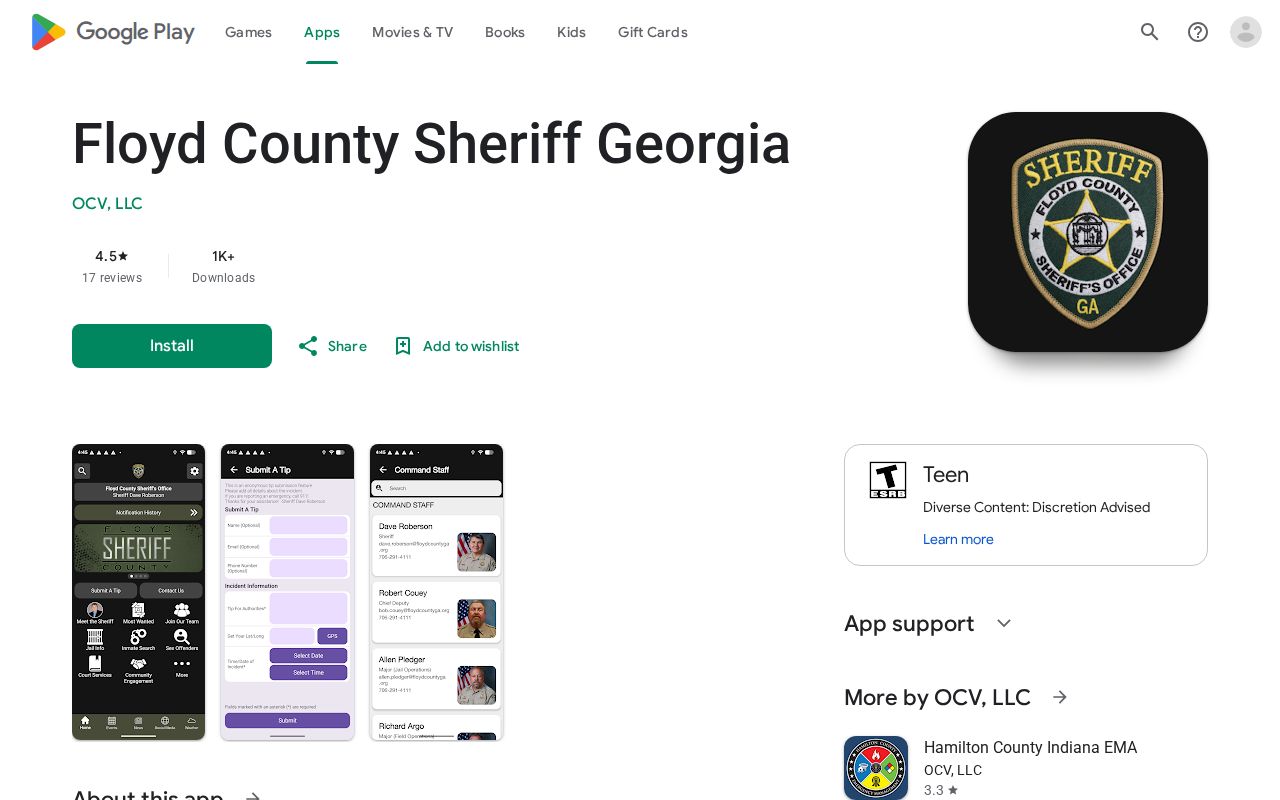
Start with what the app and VINE listings actually promise, then confirm any custody details through the sheriff or the records custodian before relying on them.
GDC Photos After a Floyd County Booking
The Georgia Department of Corrections Find an Offender search is a different animal from the Floyd County Jail roster. It will not show everyone arrested in Rome or Cave Spring. A person only appears there after a qualifying state sentence or another GDC-covered status. A county booking alone does not qualify.
Searching works by name, description, ID, or case number. GDC's own FAQ suggests typing just the first four letters of a last name and selecting all offenders if a narrow active-only search comes up empty. Profiles show a photo when one exists. Photos can be added later. An absent photo does not mean none was ever taken.
Before assuming a profile belongs to the right person, match the GDC ID, facility, and status. A state photo may come from a different place and time than the Floyd County booking photo. For written verification, GDC lists Inmate Records and Information at P.O. Box 1529, Forsyth, GA 31029. Ask GDC directly about its own records when a profile shows no image.
The state search is a custody-specific tool, not a feed of recent Floyd arrests.
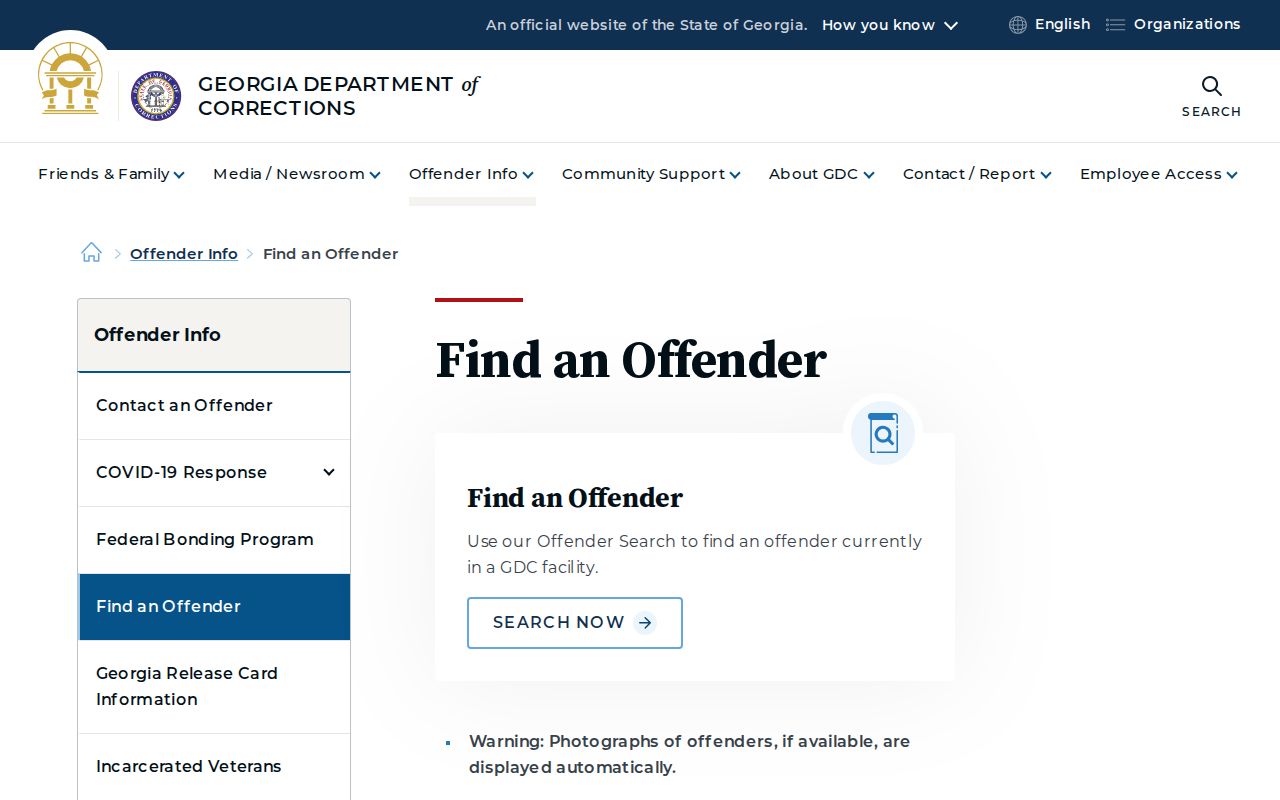
Keep the county jail, the state prison system, and the courts straight in your notes, so a later sentenced record is never mistaken for a fresh Floyd County arrest.
Floyd County Court Dispositions After Booking
A booking only opens the file. From there, much can change. A prosecutor can amend or drop charges. A grand jury can indict or decline. A judge can revisit bond. A case may then end by dismissal, nolle prosequi, diversion, plea, acquittal, conviction, or some other outcome. "Disposition" refers to that final court result, not the charge label printed when the person was booked.
- Arraignment
- An early court hearing where the case and plea process begin; it is not the final outcome.
- Bond
- A release condition or amount set under the applicable process. It can change and does not indicate guilt.
- Disposition
- The later court result, such as dismissal, plea, acquittal, or conviction.
- Expungement or restriction
- A legal process that can limit or alter record access under Georgia law; it is not an instant command to every copied page.
The Floyd Superior Court Clerk is the starting point. Its local web case management search handles online lookups. The statewide court directory cautions that access may route through a provider or require an account. For early-stage matters and warrants, Floyd Magistrate Court sits at 3 Government Plaza, Suite 227, Rome, Georgia 30161, and answers at 706-291-5250, Monday through Friday, 8:15 a.m. to 4:45 p.m. Which court you need depends on the paperwork in hand.
Follow the case to its end. A roster entry, a wanted card, or a booking photo only captures the start of a case. What happens later lives in the court file. Dismissals, reduced charges, pleas, and convictions all show up there. That docket, not the arrest paperwork, tells you how the matter actually resolved.
Good record habits matter here. Save the case number and the search date whenever you pull a docket. An unofficial site may still list original charges after the court has changed them. When that happens, point to the docket and ask the site to correct it. Never treat a copied summary as the final word on an outcome.
Federal Custody and Floyd County Records
Federal systems answer questions the county roster cannot. The Federal Bureau of Prisons Inmate Locator finds people serving federal sentences, within the limits it publishes. It is not a Floyd County arrest list. There is no public federal booking-photo archive behind it either. Records for anyone released before 1982 can be spotty, and someone picked up locally may sit in marshal custody for a while before landing at a permanent facility.
Immigration detention works through a different door. The ICE Online Detainee Locator tracks immigration holds, not criminal convictions and not county booking photos. A name, a language, or a random post online proves nothing about a person's status. The Marshals Service posts some fugitive notices, but no full public mugshot database exists.
So match the agency to the question, and match the date too. Someone absent from the BOP locator might still be moving through another federal stage. Someone gone from the county roster might simply have been released or transferred. Federal tools answer custody questions. They cannot tell you anything about a Floyd booking beyond that, and they should never be stretched into guesses about a person's immigration standing.
A custody search is not a gallery.
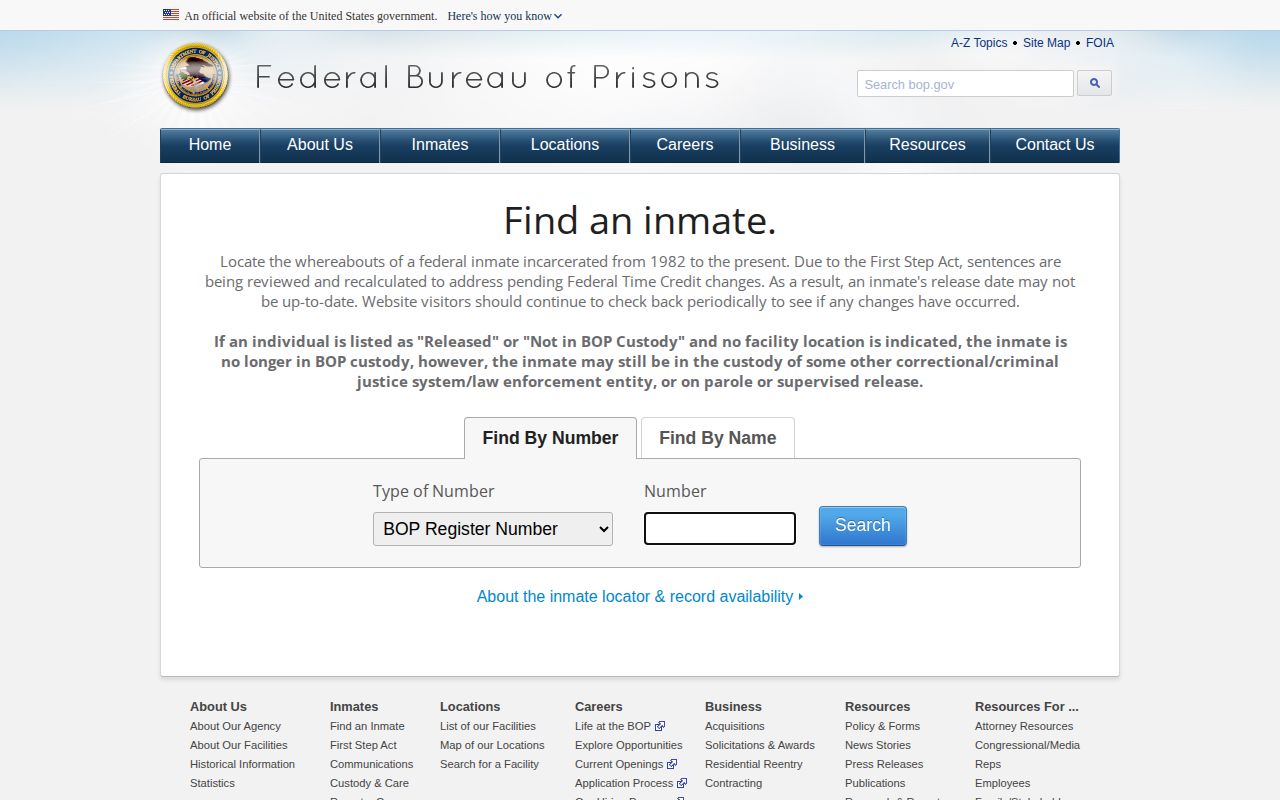
The image marks the line between a federal locator and the Floyd County Jail roster.
Floyd County Busted Mugshots by City
Floyd County contains two incorporated cities on the sourced map. Each city runs its own police department, and either one can write an arrest or incident report. Booking, though, happens at the county level. When someone is booked into the county jail, a shared intake record is created there. Seeing a city named in a news story does not tell you which agency made the bust.
- Rome Busted Mugshots: Rome Police Department operates at 375 Technology Parkway, and Rome arrestees may enter the Floyd County Jail. No Rome PD daily person-level booking feed was found; its records path and county handoff matter more than a city-only search.
- Cave Spring Busted Mugshots: Cave Spring Police Department serves the smaller municipality, while the county jail is the documented booking destination. No dedicated Cave Spring blotter was found, so the city report and county intake request are separate steps.
Rome and Cave Spring show up across countywide coverage: Coosa Valley News, WRGA, Georgia Gazette, RecentlyBooked, Mugshots.com, and more. Treat all of it as secondary. Stories drop city names, repeat stale charges, or publish on a date well after the actual arrest. For the record that matters, the official roster, a records request, and the court docket form the strongest chain.
City pages are still handy for local police contacts and booking handoffs. Once you need the record that follows custody, come back to the county systems.